Why Dental Offices Should Lease Their Computer Equipment
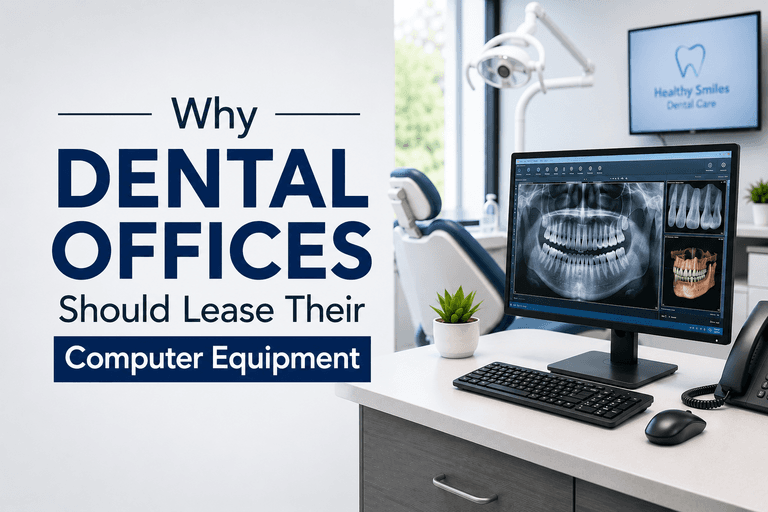
Dental practices depend on computers every day to schedule patients, capture X-rays, access practice management software, process payments, and communicate with patients. Yet many offices still approach computers differently from almost every other piece of technology they use.
Hardware leasing and subscription-based technology models have been around for decades. Most of us already use them for cell phones, internet equipment, office copiers, and other technology services.
So why do many dental offices still purchase computers outright?
At DMA Tech Solutions, we hear several common objections to leasing dental computer equipment through programs like TechFresh. Here are the most common concerns—and why the monthly hardware model may actually make more sense for many dental practices.
“I Like to Own Everything. I Don’t Like Subscriptions.”
There are certainly things that make sense to own—especially assets that maintain or increase their value.
Computer equipment is generally the opposite.
A $1,000 investment in an appreciating asset is very different from purchasing a $1,000 computer. After about five years, most business computers have very little resale value. Their real value comes from what they enable your dental practice to accomplish while they are in service.
That means the better question is not necessarily:
“Do I own the computer?”
It is:
“What is the most efficient way to have reliable, productive computers available to my practice?”
Purchasing computers outright also ties up capital that could otherwise remain available for the business. A dental practice may be able to use that money for marketing, new equipment, renovations, hiring, acquisitions, debt reduction, or simply maintaining additional cash reserves.
Even leaving those funds in an interest-bearing account creates an opportunity cost that should be considered when comparing an upfront purchase with a monthly hardware program.
“Won’t Leasing My Dental Computers Cost More Over Time?”
Not necessarily—and looking only at the total of the monthly payments can be misleading.
The TechFresh program offers some unique benefits compared to a simple cash purchase:
DMA assumes responsibility for keeping that covered hardware operational throughout the program term. That includes warranty protection and, when necessary, replacement of failed-covered equipment.
When evaluating the two options, some practices simply multiply the monthly payment by the number of months and compare that number with the original cash purchase price.
That ignores the time value of money.
Money paid several years from now is not financially equivalent to money paid today. Paying upfront means giving up the ability to keep that capital invested or working inside your dental practice.
Preserving capital can create greater financial flexibility and potentially generate a better return elsewhere.
For most dental practices, the comparison should therefore be:
Upfront purchase price + warranty and replacement risk + opportunity cost of the cash
versus
Predictable monthly cost + hardware protection + preserved working capital.
That is a much more accurate comparison.
“What Happens If We Stop Using DMA Before the Computer Term Ends?”
Your hardware agreement does not require you to continue using DMA for managed IT services.
If your practice moves to another IT provider during the hardware term, you can continue making the scheduled hardware payments until the end of the agreement.
You can also choose to pay off the remaining balance early.
In other words, changing IT companies does not suddenly mean losing the computers your practice depends on.
“I’m Planning to Sell My Dental Practice in the Next Year or Two.”
This can actually be one of the strongest reasons to consider a monthly hardware program.
A dentist approaching retirement may hesitate to spend tens of thousands of dollars replacing aging computers shortly before selling the practice.
But postponing necessary upgrades can create other problems:
- Slower computers and frustrated employees
- Increased downtime
- Compatibility problems with newer dental software
- Greater cybersecurity risk
- A technology environment that is less attractive to a potential buyer
With a monthly hardware program, the practice can upgrade its computers now without making a large upfront investment immediately before a sale.
When the practice sells, the buyer may be able to assume the remaining payments, or the outstanding balance can simply be addressed as part of the transaction.
This gives the selling doctor substantially more flexibility than delaying necessary technology upgrades.
“I Want to Buy Computers Outright Because I Need the Tax Deduction.”
Whether you lease or buy outright, both routes can yield tax deductions for your business.
The right answer depends on your specific circumstances, so practices should discuss the tax treatment with their CPA or tax advisor.
The important point is that paying cash for computers is not the only way to receive a business tax benefit from your technology spending.
The Bigger Benefit: A Predictable Dental Technology Lifecycle
The strongest argument for leasing dental computer equipment is not simply financing.
It is lifecycle management.
Dental practices should not have to wait until computers become painfully slow, incompatible, or unreliable before replacing them.
A structured hardware program makes technology replacement predictable.
Instead of periodically facing a large $10,000, $20,000, or $30,000 hardware project, the practice can build computer replacement into a consistent monthly technology budget.
That helps create:
- Predictable monthly technology costs
- Fewer unexpected hardware expenses
- Reduced downtime
- Consistently newer equipment
- Better compatibility with dental software
- Improved cybersecurity
- Less capital tied up in depreciating technology
Computers Are a Tool, Not an Investment
Ultimately, a dental practice does not make money because it owns computers.
It makes money because those computers allow the team to efficiently treat patients, access clinical information, capture images, schedule appointments, submit insurance claims, and operate the business.
The goal should therefore be to keep the technology reliable, current, secure, and financially predictable.
For many dental practices, leasing computers through a managed hardware lifecycle program accomplishes that better than periodically purchasing equipment outright.
TechFresh from DMA Tech Solutions was designed around that idea: keep your dental practice equipped with current, reliable technology without large, unpredictable hardware purchases.
Have questions about this article?
Our team of Ohio dental IT specialists is available to help explain compliance safeguards or software setups.